
Arboriculture
Specialist health and safety advice and ISO certification support for arboriculture and vegetation management businesses throughout the UK.
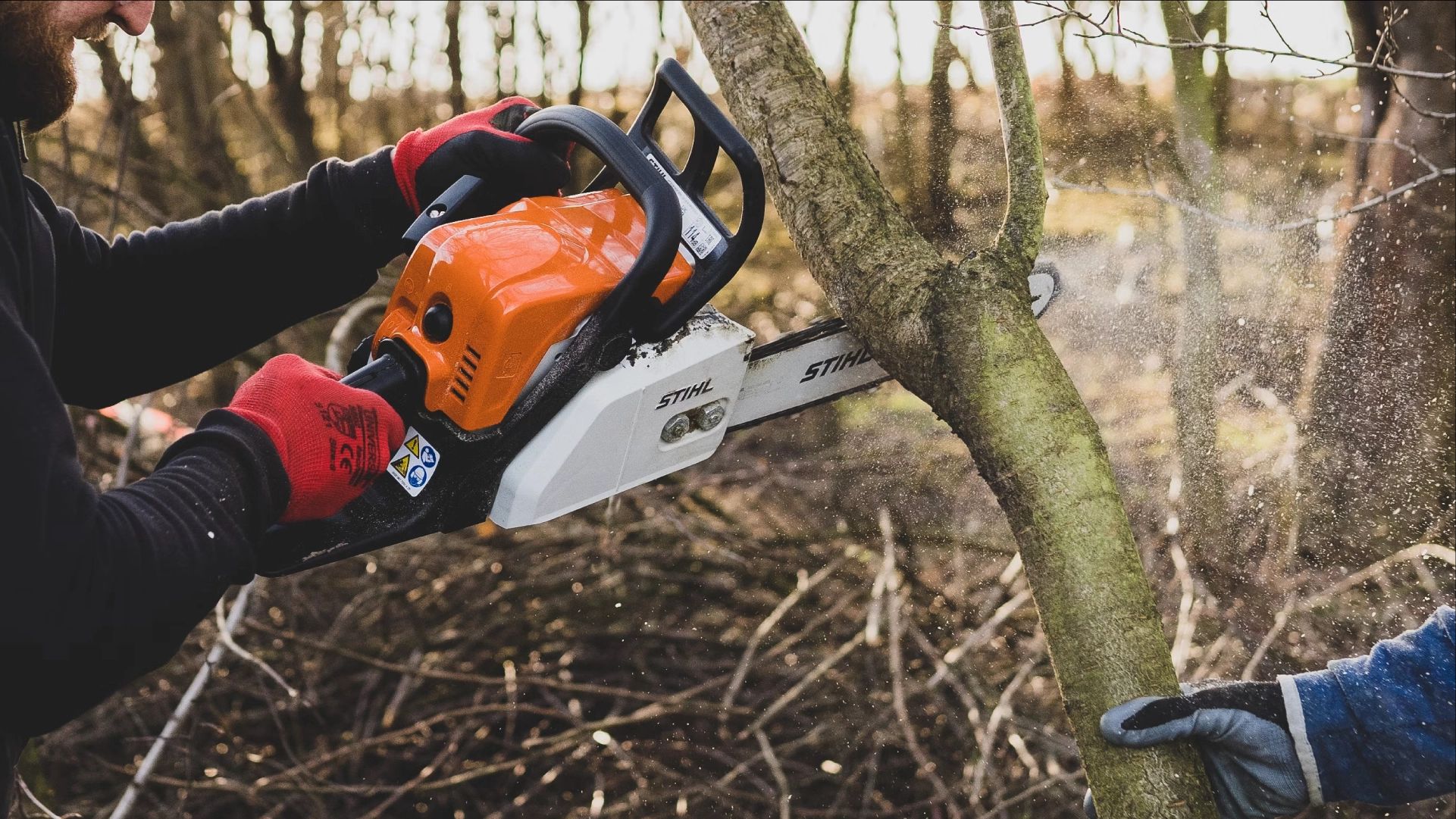
Arboriculture brings together work at height, powerful machinery and heavy loads that can shift without warning. Effective controls must address climbing and MEWP operations, chainsaws and woodchippers, falling or suspended timber, unstable trees, and nearby overhead or underground services.
Those controls must work wherever your teams are operating. Competence and qualifications need to match each task, with aerial rescue, first aid, traffic management and exclusion zones planned before work begins. Point-of-work assessments must then respond to changes in the tree, weather, access and surrounding environment.
We help you understand which requirements apply, strengthen your existing arrangements and close compliance gaps. The result is a clearer, better-documented safety system that protects your workforce and stands up to scrutiny from clients and regulators.
How we help arborist contractors
Retained competent person service
Every employer must have access to competent health and safety advice under Regulation 7 of the Management of Health and Safety at Work Regulations 1999.
Our retained service gives you access to a named consultant who understands your activities, equipment and client requirements. We establish responsibilities, review your current arrangements and maintain an action plan so that identified gaps are assigned and closed.
As your work changes, you have someone to assess the health and safety implications before new services, equipment or contracts are introduced.
RAMS and tree work documentation
Generic paperwork is rarely suitable and sufficient for such high-risk work. Your teams need controls that match the tree, equipment, site and working methods.
We create or review risk assessments, method statements and safe systems covering activities such as:
- Climbing and MEWP use
- Chainsaw use on the ground and in trees
- Falling or suspended timber
- Felling, dismantling and rigging
- Wood chippers, stump grinders and other machinery
- Roadside and public-access work
- Diseased, decayed, windblown or hung-up trees
- Work near overhead and underground services
- Lone and remote working
- First aid and emergency procedures
Your documents will include clear responsibilities, exclusion arrangements, required competence, emergency controls and conditions that should trigger reassessment or a stop-work decision.
Accreditation and tender support
ARB Approved Contractor, CHAS, SafeContractor, Constructionline and utility pre-qualification questionnaires. We prepare your evidence, complete the submissions and deal with any assessor or validator queries until you're through. Chasing a framework deadline? Tell us the date and we'll work to it.
Site inspections and audits
Our inspections review work positioning, equipment use, supervision, overhead line risks, site segregation, emergency readiness and compliance with your RAMS. Findings are prioritised so that you know which actions require immediate attention and which belong in a longer-term improvement plan.
We also organise any required evidence requested by commercial clients, principal contractors and Distribution Network Operators. This can include policies, competence records, inspection reports, corrective-action logs and examples of completed site documentation.
ISO certification support
ISO certification gives you a structured way to manage safety, service quality and environmental responsibilities across teams, sites and contracts.
We support arboriculture businesses seeking:
- ISO 45001:2018 for health and safety management
- ISO 9001:2015 for quality management
- ISO 14001:2015 for environmental management
Certification is awarded by your chosen accredited certification body. Principal Risk prepares your business for that independent assessment and supports you through the process.
Frequently asked questions
Your business needs a health and safety policy. The policy must be written down when you employ five or more people.
You also need suitable and sufficient risk assessments, with significant findings recorded when you have five or more employees. For tree work, your supporting documents will usually include site-specific risk assessments and method statements, competence records, equipment inspections, maintenance records, LOLER reports, first-aid arrangements and an aerial-rescue plan.
You should also maintain records for accidents, near misses, applicable RIDDOR reports and corrective actions. Utility contractors will need evidence of relevant utility arboriculture competence and coordination with the network owner.
Every job needs a suitable assessment of its risks before work starts.
You do not necessarily need to produce a completely new long-form document where routine hazards are already covered. However, the site assessment must address the actual tree, its condition, the proposed work method, nearby services, public access, traffic, weather, access for emergency services and rescue arrangements.
The assessment should be reviewed during the job. If the tree behaves unexpectedly, the weather changes, the public enters the exclusion zone or the planned method no longer works, the team should stop and reassess before continuing.
Climbing equipment should receive a competent pre-use check before it is used. HSE guidance also recommends keeping a written weekly inspection record for items exposed to high levels of wear, including ropes.
Unless a competent person has prepared a written examination scheme specifying another interval, equipment and accessories used to lift people require a thorough examination every six months. Other lifting equipment normally requires examination every 12 months.
Additional examination may be required following damage, failure, prolonged storage or another event that could affect the equipment's safety. Equipment with a safety-related defect should be withdrawn from use until the defect has been resolved.
When arboricultural work is proposed within 10 metres horizontally at ground level from the nearest overhead wire, you should obtain specialist advice from the network owner before work begins.
The agreed safe system may require the electricity supply to be disconnected, revised safety distances based on the work method and competence of the contractor, or appointment of a specialist utility arboricultural contractor.
You must also consider work taking place more than 10 metres away if falling trees, timber, cranes or mobile elevating work platforms could breach that distance. Underground electrical cables and other buried services need to be included in the assessment.
Workers must have competence relevant to their assigned utility arboriculture tasks, supported by site controls, emergency arrangements and clear communication with the network owner.