
Construction
Practical CDM, site safety and ISO support for contractors, specialist trades, project managers and designers — helping you stay compliant, win more tenders and reduce the administrative burden.
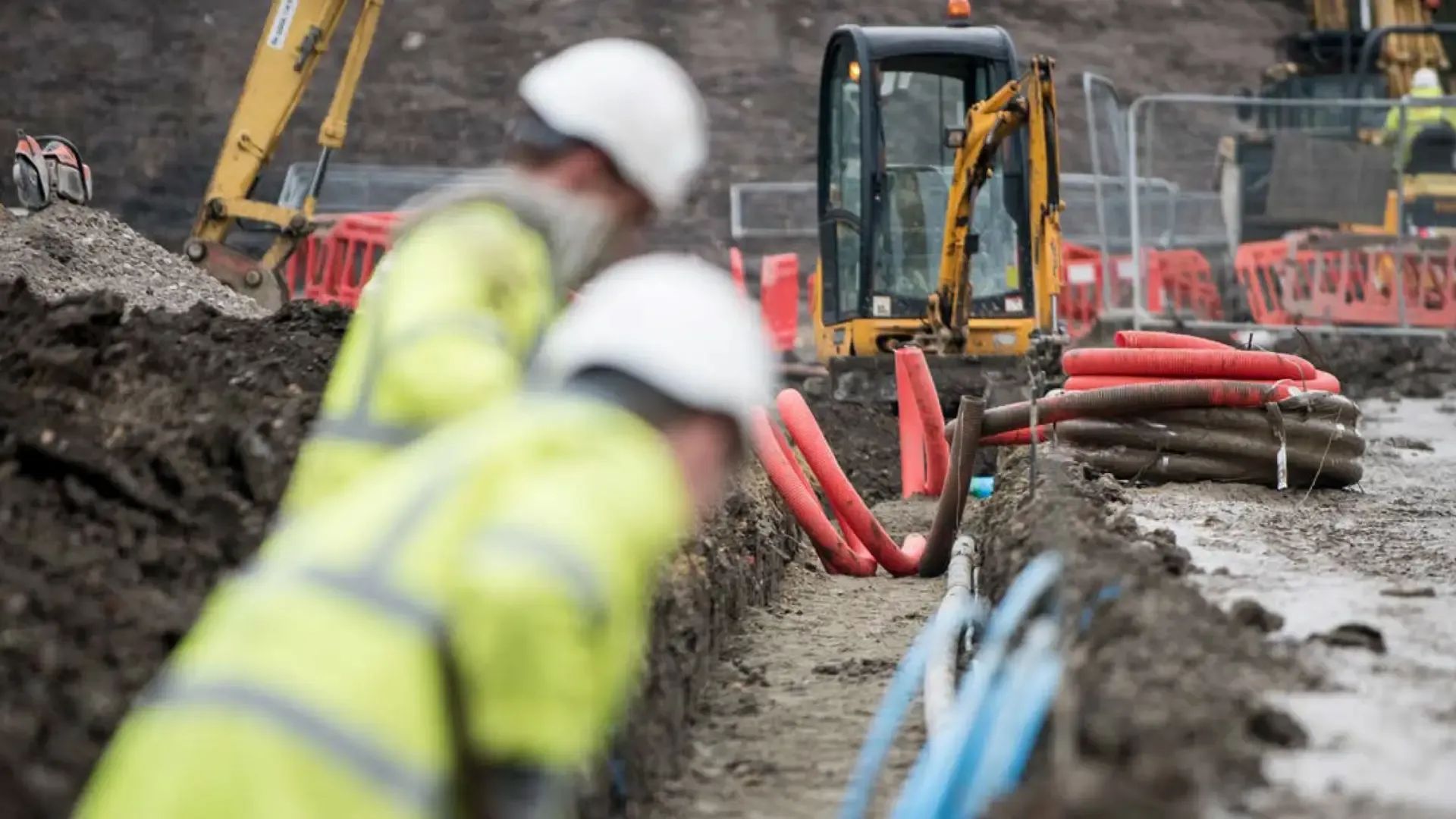
Construction accounts for more workplace deaths than any other UK industry, and over half of them are falls from height. Yet for most small to medium-sized businesses in the construction and built environment sector, the hardest part isn't understanding the risks; it's finding the time and expertise to manage them properly while still running the business.
Falls from height are the biggest killer on UK sites by a large margin, accounting for more than half of all construction deaths in recent years. Behind them sit three more hazards that appear in the HSE's fatality statistics year after year: workers struck by moving site vehicles, people trapped when structures, excavations or plant collapse or overturn, and injuries from falling tools and materials. And that's before you count the incidents that don't make headlines or are not reported to the HSE, such as slips and trips, manual handling injuries, and occupational health damage from silica dust, noise and vibration that affects tens of thousands of construction workers every year.
Now add the compliance requirements of CDM 2015 which applies to every construction project, from a loft conversion to a distribution centre, and whether you're the client, principal contractor or a two-person subcontractor, you hold legal duties under it. Further, the Building Safety Act has added a regime that many businesses describe as overwhelming, and that plenty wrongly assume only applies to high-rise work.
Clients want more and more documentation for every job. Tenders increasingly demand SSIP accreditations such as CHAS, SafeContractor, Constructionline or Acclaim before you can even apply. And somewhere in all of that, you're supposed to actually design and build things.
Most construction SMEs don't have the luxury of a full-time health and safety manager. The management team does it in the evenings, or it doesn't get done. That's exactly the gap Principal Risk fills.
Health and safety support for construction SMEs
CDM 2015 advice and support
We help you understand and discharge your duties under CDM, whatever your role on the project — client, principal designer, principal contractor or contractor. That includes construction phase plans, pre-construction information, F10 notifications and ongoing duty holder advice, explained in plain English.
Risk Assessments, method statements and site safety documentation
Clear, proportionate risk assessments, method statements and supporting site safety documentation tailored to your scope of work. Each document explains how the risks will be controlled and the work carried out safely, helping you meet your duties and satisfy client and principal contractor requirements.
SSIP accreditation support
CHAS, SafeContractor, Constructionline, Acclaim — we prepare your evidence, complete the submission and deal with any assessor queries until you're accredited. If you're chasing a tender deadline, tell us the date, and we'll work to it.
Retained competent person service
Get the health and safety expertise your business needs without the cost of employing someone in-house. Our flexible monthly and annual subscriptions give you direct access to a named chartered consultant, reliable ongoing support and exclusive discounts on additional consultancy services.
Site inspections and audits
Our site inspections and audits assess working practices, site conditions and compliance with your procedures and legal duties. Findings are recorded in a practical action report, prioritised by risk, so responsible persons can address shortcomings and demonstrate effective health and safety management.
ISO certification support
ISO 9001, ISO 14001 and ISO 45001 can strengthen tender submissions and help you meet demanding client and supply-chain requirements. We provide practical support throughout the process, helping you build the required systems, prepare your evidence and get ready for assessment by an accredited certification body.
Frequently asked questions
Yes. CDM 2015 applies to all construction work in Great Britain, including domestic projects — there is no small-project exemption. What changes with project size is who holds which duties and whether the project must be notified to the HSE using an F10 (required where work exceeds 30 working days with 20+ workers simultaneously, or 500 person-days).
SSIP (Safety Schemes in Procurement) is the umbrella for accreditation schemes such as CHAS, SafeContractor and Constructionline, which verify a contractor's health and safety arrangements. There's no legal requirement to hold one — but many main contractors and public-sector clients won't add you to a tender list without it.
Not specifically — but you do legally need access to competent health and safety advice under Regulation 7 of the Management of Health and Safety at Work Regulations 1999. If nobody in your business has the training, knowledge and experience to fill that role, appointing an external consultant is the standard way to comply. Our retained service is built for exactly this.
RAMS stands for risk assessments and method statements: the risk assessment identifies the hazards in a task and how you'll control them; the method statement sets out step by step how the work will be done safely. Risk assessment is a legal requirement for every employer; method statements aren't named in law, but principal contractors and clients will expect them for almost any site work — in practice, no RAMS means no start on site.
Retained support for a typical construction SME starts from £99 per month, depending on headcount, the nature of your work and how much site presence you need. One-off projects — a set of RAMS, an SSIP submission, a construction phase plan — are quoted as fixed fees, so there are no surprises.
For most construction SMEs, 3-6 months from starting work to certification, depending on how developed your existing systems are. The process involves building or refining your safety management system, running it long enough to generate evidence, then a two-stage external audit by a certification body. If you already hold SSIP accreditation, you're further along than you might think.