
Manufacturing
Practical health and safety, ISO and compliance support that helps manufacturers meet their obligations without disrupting production.
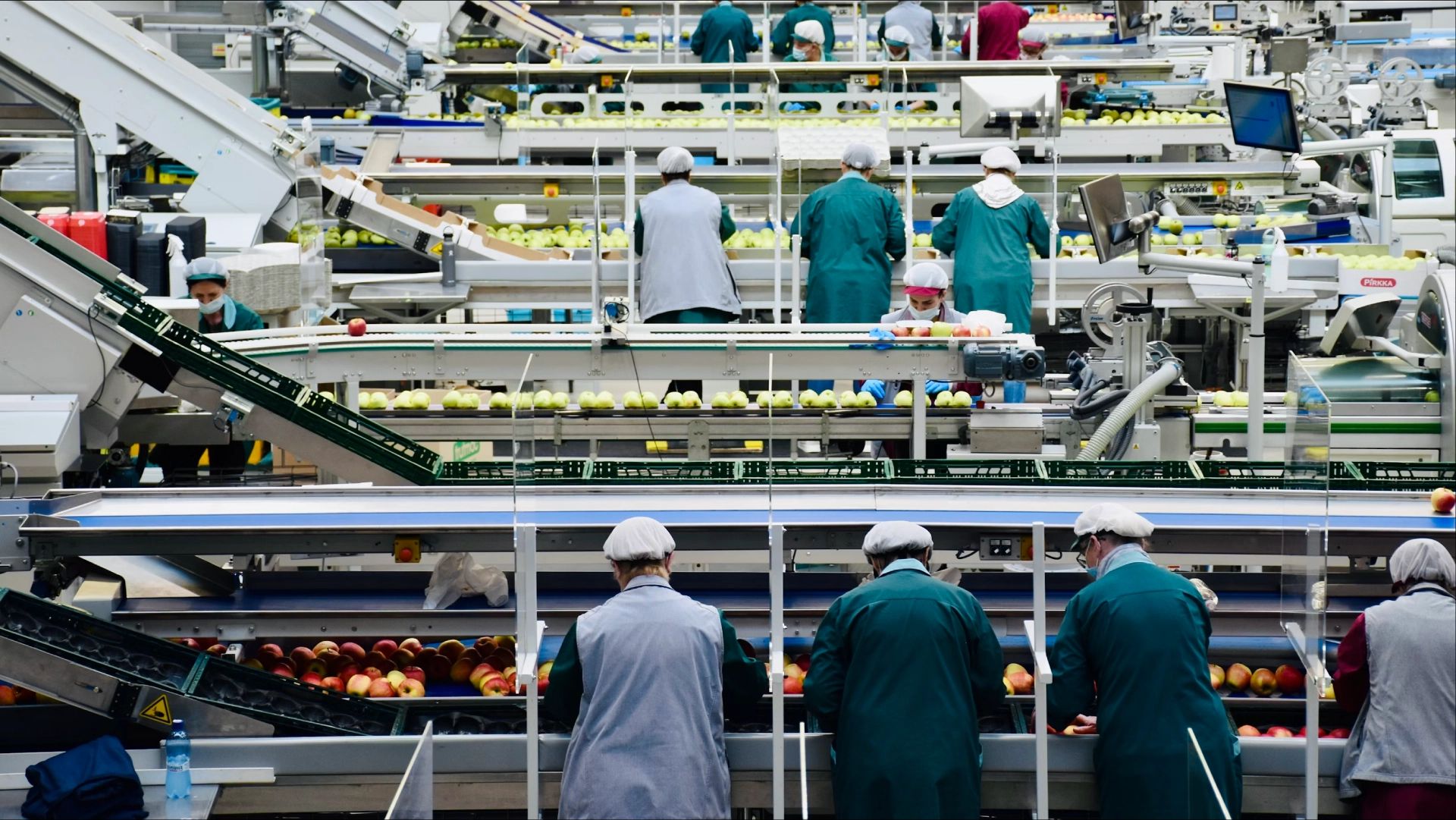
Machinery remains the sector's defining hazard. Contact with moving parts kills and maims in manufacturing year after year, and most incidents trace back to a familiar failure: a guard removed and never refitted, or a machine that was used during maintenance because nobody locked it off. Further, the Provision and Use of Work Equipment Regulations 1998 (PUWER) make guarding, maintenance and safe operation your legal responsibility as the employer, on every machine from a CNC to a bench grinder.
Musculoskeletal disorders account for around 40% of work-related ill health in manufacturing, built up through years of lifting, reaching and repetitive assembly work. Hearing loss affects manufacturing workers more than almost any other trade. Weld fume and process dusts fall under the Control of Substances Hazardous to Health Regulations 2002 (COSHH), and occupational lung disease is still linked to an estimated 11,000 deaths a year in Britain from past exposures.
None of these shows up in your accident book until the damage is done. Add the forklifts and delivery vehicles sharing floor space with people on foot, and a steady share of the sector's serious injuries needs no machine at all.
Proving you manage all this has become a job in itself. Your bigger customers audit their supply chain and expect documents on request. Your insurer wants evidence before renewal. Machinery needs assessing, lifting equipment needs statutory thorough examination, noise needs surveying, and there's product to get out of the door.
Health and safety support for manufacturers
Retained competent person service
Our retained competent person service gives you ongoing access to a named chartered health and safety consultant who becomes familiar with your site and operations. You receive practical advice when you need it, consistent support over time and a cost-effective alternative to employing a full-time safety professional.
Machinery and PUWER risk assessments
Keep your machinery safe, compliant and productive. We assess equipment against the Provision and Use of Work Equipment Regulations 1998 (PUWER), identify issues with guarding, isolation, maintenance access and emergency stops, and recommend practical improvements that protect your people without creating unnecessary disruption.
COSHH, noise and occupational health
Fume, dust and noise are where manufacturers most often get caught out, because the harm stays invisible for years. We handle COSHH assessments, arrange exposure and noise monitoring, and set up the health surveillance your processes legally require.
Workplace transport and site safety reviews
A walk-through of your site by a competent person with the necessary knowledge, skills and experience, covering vehicle and pedestrian segregation, loading bays, racking and traffic routes. You receive a comprehensive report that tells you what needs fixing now and what can wait.
Accident investigation and RIDDOR support
When something goes wrong, we investigate it with you, report to the HSE where the Reporting of Injuries, Diseases and Dangerous Occurrences Regulations 2013 (RIDDOR) require it, and fix the root cause before it recurs.
ISO certification for manufacturers
Consistent product quality isn't optional for manufacturers, and neither is a safe workplace or a responsible environmental footprint. Customer expectations, regulatory compliance and day-to-day operational efficiency all rest on the same foundation. ISO 9001, ISO 14001 and ISO 45001 give you a proven way to build it, covering quality, environmental management and health and safety in one integrated approach.
Because all three standards share the same underlying structure, they work best as a single integrated management system rather than three parallel systems. At Principal Risk, we can build and maintain your ISO management systems and help to deliver real operational benefits.
Frequently asked questions
PUWER is the Provision and Use of Work Equipment Regulations 1998. It applies to every piece of work equipment you provide, old or new, owned or hired, from production machinery to hand tools. It requires equipment to be suitable, maintained, inspected where needed and properly guarded, with operators trained to use it.
If your processes use or create substances hazardous to health, yes, it's a legal requirement under COSHH 2002. In manufacturing, that typically means weld fume, cutting fluids, solvents, adhesives and process dusts. The assessment identifies who is exposed and how, then sets the controls, monitoring and any health surveillance you need.
There's no legal requirement, but many OEMs, tier-one suppliers and public sector buyers make ISO 9001 a condition of their approved supplier lists, and score ISO 14001 and ISO 45001 in tenders. If a questionnaire has asked you for certification recently, expect the question again. We take manufacturers from no formal system to certification.
Yes. Under the Lifting Operations and Lifting Equipment Regulations 1998 (LOLER), forklifts need a thorough examination by a competent person at least every 12 months, or every 6 months if they lift people. That's separate from routine maintenance and daily pre-use checks, which you also need. Missing certificates are one of the first things both insurers and HSE inspectors ask for.